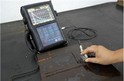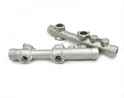

Hey there! As a supplier of Magnetic Powder Inspection (MPI) services and equipment, I'm super stoked to walk you through the steps of this amazing non - destructive testing method. MPI is a go - to technique for detecting surface and near - surface discontinuities in ferromagnetic materials. It's widely used in industries like automotive, aerospace, and manufacturing to ensure the safety and quality of components.
Step 1: Pre - Inspection Preparation
Before we jump into the actual inspection, we've got to get everything ready. First off, we need to clean the surface of the test piece. Any dirt, oil, paint, or rust can interfere with the magnetic field and the way the magnetic powder adheres, so a thorough cleaning is a must. We usually use solvents, abrasive blasting, or mechanical cleaning methods to get the surface nice and clean.


Once the surface is clean, we need to check the material. MPI only works on ferromagnetic materials, like iron, nickel, and cobalt, and their alloys. If the material isn't ferromagnetic, we'll have to look into other non - destructive testing methods such as X Ray Inspection or Dye Penetrant Inspection.
We also need to select the right magnetic powder. There are two main types: dry and wet. Dry powder is great for rough surfaces and when we need to inspect large areas quickly. Wet powder, on the other hand, is used in a liquid suspension and is more sensitive, making it ideal for detecting smaller discontinuities.
Step 2: Magnetization
Now that we're all prepped, it's time to magnetize the test piece. There are a few different ways to do this. One common method is using a permanent magnet. These are handy for small parts or when we need a quick check. They're easy to use and don't require any power source.
Another popular method is using an electromagnet. We can control the strength of the magnetic field by adjusting the current. This gives us more flexibility, especially when dealing with different sizes and shapes of test pieces.
We can magnetize the part either longitudinally or circularly. Longitudinal magnetization is used to detect discontinuities that are perpendicular to the axis of magnetization, while circular magnetization is for detecting discontinuities parallel to the axis. In some cases, we might even use a combination of both to get a more comprehensive inspection.
Step 3: Application of Magnetic Powder
After the test piece is magnetized, it's time to apply the magnetic powder. If we're using dry powder, we simply dust it over the surface of the magnetized part. We can use a powder blower or just sprinkle it by hand. The powder will be attracted to the areas where the magnetic field is disrupted, which are likely to be discontinuities.
For wet powder, we pump the liquid suspension containing the magnetic particles over the test piece. The liquid helps the powder to flow smoothly and adhere better to the surface. We can use a spray gun or a dipping tank, depending on the size and shape of the part.
Step 4: Inspection and Interpretation
Once the magnetic powder is applied, we start looking for indications. These are the areas where the powder has accumulated, showing possible discontinuities. We use good lighting to make sure we can see the indications clearly. Sometimes, we might use a magnifying glass to get a closer look at small indications.
Interpreting the indications can be a bit tricky. Not all accumulations of magnetic powder mean there's a serious defect. Some might be caused by surface roughness or magnetic field variations. We need to have a trained inspector who knows how to distinguish between relevant and non - relevant indications.
We also need to measure the size and shape of the indications. This helps us to determine the severity of the discontinuity. For example, a long, thin indication might be a crack, while a round or irregular indication could be a porosity or inclusion.
Step 5: Demagnetization
After the inspection is done, we need to demagnetize the test piece. A magnetized part can attract iron particles during its normal use, which can cause problems. Demagnetization is usually done by applying a decreasing alternating magnetic field. This gradually reduces the residual magnetism in the part until it's close to zero.
Step 6: Post - Inspection Cleaning
Finally, we clean the test piece again to remove any remaining magnetic powder. We can use the same cleaning methods as in the pre - inspection preparation. This leaves the part in a clean and ready - to - use condition.
As a Magnetic Powder Inspection supplier, we've got all the expertise and equipment to carry out these steps efficiently and accurately. Whether you need to inspect small components or large structures, we can tailor our services to meet your specific needs.
If you're in the market for Magnetic Powder Inspection services or equipment, don't hesitate to reach out. We're always happy to have a chat about your requirements and how we can help you ensure the quality and safety of your products. You can learn more about our Magnetic Powder Inspection services on our website.
References
- ASNT (American Society for Nondestructive Testing). Magnetic Particle Testing Handbook.
- ASTM (American Society for Testing and Materials). Standards related to Magnetic Powder Inspection.