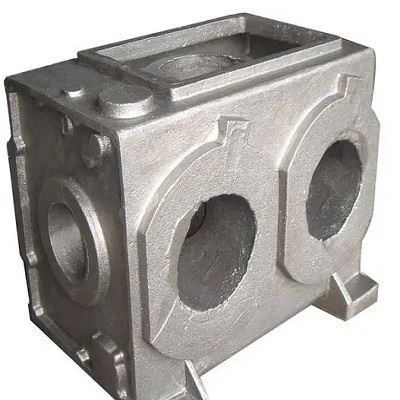


Custom metal casting parts manufactured strictly according to customer 2D engineering drawings and 3D CAD models. Production capabilities span silica sol investment casting, water glass investment casting, and resin sand casting, accommodating single-piece component weights from 0.01 kg to 100 kg.
Production facilities handle complex internal geometries, thin-wall structures down to 1.5 mm, and tight dimensional tolerances adhering to ISO 8062 CT4-CT6.
Quick Technical Matrix
|
Parameter |
Standard Capability / Limit |
|
Weight Range |
0.01 kg - 100 kg (Silica Sol: 0.01-50 kg; Sand Casting: up to 100 kg) |
|
Minimum Wall Thickness |
1.5 mm (Silica Sol Process) |
|
Linear Tolerance Class |
ISO 8062 CT4 - CT6 (Investment Casting) / CT8 - CT10 (Sand Casting) |
|
As-Cast Surface Roughness |
Ra 1.6 um - Ra 6.3 um (Post-machined: down to Ra 0.4 um) |
|
Accepted CAD Formats |
STEP, IGES, X_T, DWG, DXF, PDF |
|
Quality Management |
ISO 9001:2015 certified / EN 10204 3.1 material traceability |
Manufacturing Process
Process selection depends on dimensional tolerance requirements, surface finish requirements, geometric complexity, and order volume.
Process Selection Guide
|
Process Type |
Linear Accuracy (ISO 8062) |
As-Cast Surface (Ra) |
Minimum Wall Thickness |
Economic Lot Size |
Ideal Component Types |
|
Silica Sol Investment Casting |
CT4 - CT6 |
1.6 - 3.2 um |
1.5 mm |
100 - 50,000+ pcs |
Complex stainless steel, carbon steel, and nickel-alloy components requiring minimal secondary machining. |
|
Water Glass Investment Casting |
CT7 - CT9 |
6.3 - 12.5 um |
3.0 mm |
500 - 100,000+ pcs |
Medium-to-large carbon steel and low-alloy steel castings where unit cost is prioritized over fine surface finish. |
|
Resin Sand Casting |
CT8 - CT10 |
12.5 - 25.0 um |
5.0 mm |
50 - 5,000 pcs |
Heavy structural brackets, large valve bodies, and pump housings with thick cross-sections up to 100 kg. |
Silica Sol Investment Casting Process Flow
• Tooling Injection: High-precision aluminum dies inject temperature-controlled wax to form wax patterns.
• Tree Assembly: Wax patterns are welded onto a central sprue to form a runner assembly.
• Shell Building: Alternating layers of silica sol slurry and refractory zircon sand (5-7 coats) build a rigid ceramic mold shell.
• Dewaxing: High-pressure steam autoclave dewaxing removes wax patterns at 160 deg C.
• High-Temperature Sintering: Shells burn out at 1000 deg C - 1100 deg C to eliminate volatiles and boost ceramic strength.
• Induction Melting & Pouring: Melt composition is verified via optical emission spectrometer before gravity/vacuum pouring.
• Knockout & Fettling: Mechanical shell removal, pneumatic riser cutting, and shot blasting.
• Secondary Processing: Heat treatment, CNC precision machining, surface finishing, and final CMM inspection.
Materials and Technical Specifications
Full material chemical composition and mechanical properties are verified per batch. Mill Test Reports (MTR) are provided according to EN 10204 3.1 standards.
|
Material Class |
Grade / Standard |
Chemical Composition Highlights |
Mechanical Properties |
Primary Industrial Application |
|
Austenitic Stainless Steel |
304 / 304L (1.4301 / 1.4307) 316 / 316L (1.4401 / 1.4404) |
Cr 18-20%, Ni 8-10.5% (304) Cr 16-18%, Ni 10-14%, Mo 2-3% (316) |
Tensile: >= 520 MPa Yield: >= 205 MPa Elongation: >= 35% |
Chemical fluid handling, marine hardware, food processing equipment, sanitary fittings. |
|
Precipitation Hardening |
17-4PH (1.4542 / CB7Cu-1) |
Cr 15-17.5%, Ni 3-5%, Cu 3-5%, Nb 0.15-0.45% |
Tensile: >= 930 MPa Hardness: 33-42 HRC (H900/H1075) |
High-strength valve shafts, pump impellers, aerospace brackets, high-load fasteners. |
|
Duplex Stainless Steel |
2205 (1.4462 / UNS S31803) 2507 (1.4410 / UNS S32750) |
Cr 21-23%, Ni 4.5-6.5%, Mo 2.5-3.5%, N 0.08-0.20% |
Tensile: >= 655 MPa Yield: >= 450 MPa PREN >= 34 |
Oil & gas subsea components, seawater desalination pumps, high-chloride process equipment. |
|
Carbon Steel |
WCB (1.0619) AISI 1020 / 1045 |
C 0.20-0.30%, Mn 0.60-1.00%, Si <= 0.60% |
Tensile: 485-655 MPa Yield: >= 250 MPa |
Structural machinery components, valve bodies, pressure vessels, automotive brackets. |
|
Alloy Steel |
4140 (42CrMo4) 8620 (21NiCrMo2-2) |
Cr 0.80-1.10%, Mo 0.15-0.25% (4140) Ni 0.40-0.70%, Cr 0.40-0.60% (8620) |
Tensile: >= 850 MPa Hardness: Up to 60 HRC (Post Q+T) |
High-stress gears, hydraulic cylinder mounts, mining wear components, drive line yokes. |
|
Heat-Resistant Steel |
HK40 (1.4848) SCH13 |
Cr 23-27%, Ni 19-22%, C 0.35-0.45% |
Continuous service up to 1050 deg C |
Heat treating furnace fixtures, petrochemical burner nozzles, incinerator grates. |
Key Product Features
Near-Net Shape Geometry:
Material utilization reaches up to 85-90%, reducing raw material consumption and minimizing secondary rough-machining cycle times.
Complex Internal Cavities:
Investment casting produces intricate internal flow channels, undercuts, curved vanes, and thin walls down to 1.5 mm without requiring EDM or multi-axis machining from solid billet.
Assembly Consolidation:
Multi-piece welded assemblies can be redesigned as a single casting, eliminating weld-joint stress concentration, inspection costs, and assembly labor.
Homogeneous Metallurgical Structure:
Controlled cooling rates and verified alloy chemistry yield fine grain structures with high resistance to structural fatigue and thermal shock.
High-Grade Surface Finish:
As-cast surface roughness of Ra 1.6-3.2 um reduces the need for surface grinding or polishing in non-sealing functional areas.
Typical Applications
Components are engineered to withstand demanding operational environments across major industries:
|
Industry Sector |
Typical Casting Components |
Primary Operating Requirements |
|
Pumps & Industrial Valves |
Closed and open impellers, pump casings, butterfly valve discs, globe valve bodies, stuffing boxes. |
Hydrostatic pressure containment up to 100 bar, cavitation erosion resistance, zero micro-porosity. |
|
Chemical & Process Engineering |
Mixer blades, heat exchanger headers, filter housings, reactor nozzles, pipe manifolds. |
Acid and alkali corrosion resistance, thermal stability under cycling temperatures up to 800 deg C. |
|
Automotive & Commercial Vehicles |
Turbocharger housings, exhaust manifolds, suspension knuckles, door hinges, engine mounts. |
High fatigue resistance under continuous cyclic vibration and high thermal loading. |
|
Mining & Earthmoving Equipment |
Excavator bucket teeth, wear plates, hydraulic manifold blocks, track links, conveyor brackets. |
Impact toughness, abrasion resistance, surface hardness up to HRC 55-62 after heat treatment. |
|
Marine Hardware |
Deck cleats, rudders, pipe fittings, propeller hubs, bow rollers, hinges. |
Resistance to pitting corrosion in saltwater environments (ASTM B117 salt spray > 1000 hours). |
Machining and Secondary Operations
In-house precision CNC machining capabilities ensure that critical functional features meet exact assembly tolerances:
Precision CNC Machining
• Machining Equipment: 3-axis, 4-axis, and 5-axis vertical/horizontal machining centers, CNC turning centers, automatic lathes, precision boring mills, wire EDM.
• Achievable Tolerances: Dimensional tolerances down to +/-0.005 mm; hole center-to-center distances to +/-0.01 mm; surface flatness and concentricity to 0.01 mm.
• Thread Standards: Metric (ISO), NPT, BSPT, UNC, UNF threads to Class 6H / 2B standards.
Heat Treatment Options
• Solution Annealing: For stainless steel components (1050 deg C - 1150 deg C followed by rapid water quenching) to restore maximum corrosion resistance and eliminate carbide precipitation.
• Quenching & Tempering (Q+T): For carbon and alloy steels to tailor tensile strength, yield strength, and impact toughness.
• Case Hardening & Carburizing: For gear teeth and wear parts needing surface hardness up to 58-62 HRC while maintaining a ductile core.
• Stress Relieving: Low-temperature heating to eliminate internal stress post-casting or post-heavy machining.
Surface Treatment & Finishing
• Electropolishing & Passivation: Performed in accordance with ASTM A967 for stainless steel parts to increase passive chromium oxide film thickness.
• Protective Coatings: Zinc plating (trivalent Cr3+ blue/yellow passivated), powder coating, E-coating (electrophoretic deposition), phosphating, hot-dip galvanizing.
• Mechanical Finishing: Shot blasting (stainless steel shot or aluminum oxide), sandblasting, mirror polishing, vibro-finishing.
Quality Control and Inspection
Quality control spans the complete production cycle, from raw material ingot receipt to final packaging. Every production lot is linked to an internal heat code for full traceability.
Inspection Methods & Equipment
|
Inspection Category |
Testing Equipment / Method |
Inspection Scope |
Standards / Criteria |
|
Chemical Analysis |
Optical Emission Spectrometer (OES) |
100% heat verification before tapping and pouring |
ASTM / DIN / EN material limits |
|
Dimensional Verification |
Coordinate Measuring Machine (CMM), Optical Profile Projector, Plug/Thread Gauges |
First Article Inspection (FAI) and random batch sampling against 2D/3D CAD |
Critical dimensions down to +/-0.005 mm |
|
Mechanical Testing |
Universal Tensile Machine, Charpy V-Notch Impact Tester, Hardness Testers |
Tensile strength (Rm), Yield strength (Rp0.2), Elongation (A%), Impact energy (J), Hardness (HBW/HRC) |
ASTM A370 / EN ISO 6892-1 |
|
Non-Destructive Testing (NDT) |
Radiographic Testing (RT), Ultrasonic Testing (UT), Magnetic Particle (MT), Liquid Penetrant (PT) |
Internal porosity, shrinkage, cracks, cold shuts, and surface discontinuities |
ASTM E446 Level 2/3, ASTM E192, ISO 3452 |
|
Pressure & Leak Testing |
Hydrostatic Pressure Test Bench, Air-Underwater Pneumatic Tester |
100% testing on pressure-retaining pump and valve castings |
Testing up to 150 bar (hydrostatic) / 6 bar (pneumatic) |
OEM and Custom Manufacturing
Full technical support is provided for new product introduction (NPI) and engineering conversions (e.g., converting welded assemblies or heavy machined billet stock to near-net castings)
Design for Manufacturability (DFM) Review: Solidification simulation software (ProCAST / MAGMASOFT) analyzes fluid velocity, cooling gradients, and thermal shrinkage before tool production. DFM feedback highlights necessary draft angles, fillet radii modifications, and wall thickness transitions to eliminate casting defects prior to tooling.
Rapid Prototyping: 3D-printed wax or resin patterns produce functional metal prototypes within 10-15 business days, allowing mechanical testing before committing to production tooling.
Tooling Construction & Ownership: High-grade aluminum and hardened steel dies are manufactured in-house. Customers retain 100% tooling ownership, with free tooling maintenance provided for the product lifecycle.
Flexible Production Scaling: Facilities support low-volume specialized runs (50-100 pieces) up to high-volume series production (>50,000 pieces/month).
What Buyers Should Provide for an RFQ
To receive an accurate commercial quotation and technical DFM review within 24-48 hours, submit the following documentation:
Engineering & Commercial Checklist
• 2D & 3D CAD Drawings:
3D Files: STEP (.stp), IGES (.igs), or Parasolid (.x_t) for accurate volumetric and weight estimation.
2D Files: PDF, DWG, or DXF specifying linear/angular tolerances, geometric dimensioning & tolerancing (GD&T), surface finish requirements (Ra), and datum features.
• Material Specifications:
Specific standard grade (e.g., ASTM A351 Grade CF8M, DIN 1.4408, EN 10213, or AISI 4140). Custom chemical profiles must be clearly stated.
• Quantity Requirements:
Sample/Prototype quantity, initial production batch size, and Estimated Annual Usage (EAU).
• Secondary Processing Requirements:
Details regarding secondary CNC machining tolerances, heat treatment conditions (e.g., Annealed, Solution Treated, Q+T to 30-35 HRC), and surface finishing specifications (e.g., Electropolished, Passivated, Powder Coated).
• Inspection & Quality Criteria:
Required Non-Destructive Testing (NDT) levels (e.g., 100% Radiographic Testing per ASTM E446, Dye Penetrant Testing), hydrostatic test pressures, or CMM dimensional reports.
Material certificate requirements (Standard: EN 10204 3.1).
• Packaging & Delivery Terms:
Packaging requirements (e.g., VCI anti-rust bags, custom plastic trays, export wooden crates) and delivery terms (FOB, CIF, DDP, DAP).
Frequently Asked Questions
Q: What is the typical lead time for tooling fabrication and sample submission?
A: Standard wax-injection aluminum tooling requires 15 to 20 calendar days depending on mold complexity and number of cavities. First Article Inspection (FAI) samples, accompanied by complete CMM dimensional reports and EN 10204 3.1 material certificates, are dispatched within 7 to 10 days after tooling qualification. Rapid 3D-printed pattern samples can be supplied in 10 calendar days.
Q: How do you prevent subsurface porosity and shrinkage defects in thick-section castings?
A: Numerical solidification simulation via MAGMASOFT is performed during die design to balance metal flow and temperature gradients. Risers, chillers, and runner systems are positioned according to simulation data. During production, ceramic foam filters inside pouring cups capture non-metallic inclusions, while vacuum-assisted casting is applied for thick-section parts to guarantee dense inner structures.
Q: Can you produce castings to equivalent European (DIN/EN), American (ASTM), or Japanese (JIS) material standards?
A: Yes. Melt compositions are controlled via real-time Optical Emission Spectrometry to match specific standards, including ASTM (USA), DIN/EN (Europe), JIS (Japan), and BS (UK). Cross-reference mapping for chemical composition and mechanical properties is confirmed prior to production order release.
Q: What shipping and delivery terms do you support for international purchases?
A: Export shipments support Incoterms including FOB, CFR, CIF, DDP, and DAP via sea freight, air freight, or express courier. Custom packaging includes VCI rust-inhibitor wrapping, vacuum sealing, custom foam trays, and IPPC ISPM-15 compliant heat-treated wooden crates.
Q: What is your policy regarding tooling ownership and long-term maintenance?
A: Tooling is 100% customer-owned upon full tooling payment. Tooling is stored in a climate-controlled die warehouse and maintained at no additional charge for the operational duration of the product line.